
• Menu
  • Skip to right header navigation
  • Skip to main content
  • Skip to footer

No Food Left Behind – Corvallis

Prevent Wasted Food

  • About Us
  • Kitchen Confessions
  • Why It Matters
    • Facts and Impacts
    • What Is Wasted
    • What About Composting?
    • DEQ Food Fact Sheets
    • Videos: Why It Matters
  • What To Do
    • Recipes for Leftovers
    • Smart Strategies
    • Estrategias Sagaces
    • Apps
    • Budget-Minded Meal Plans
    • Challenge to Waste Less Food
    • DEQ Grant Final Reports
  • Videos
  • Contact
  • Español
  • About Us
  • Kitchen Confessions
  • Why It Matters
    • Facts and Impacts
    • What Is Wasted
    • What About Composting?
    • DEQ Food Fact Sheets
    • Videos: Why It Matters
  • What To Do
    • Recipes for Leftovers
    • Smart Strategies
    • Estrategias Sagaces
    • Apps
    • Budget-Minded Meal Plans
    • Challenge to Waste Less Food
    • DEQ Grant Final Reports
  • Videos
  • Contact
  • Español

Budget Bites

Talking Turkey and wasting less

November 12, 2020 //  by K'Rene (Karen) Kos

(updated Nov. 2025)

Greetings, Conscientious Food Consumers!

It’s time to “talk turkey” (even for vegans and vegetarians) about less wasted food.

Imagine sitting at bountiful Thanksgiving dinner table. You’ve just filled your plate with an appetizing assortment of your favorite dishes. Suddenly, someone comes over and scoops up a quarter of what’s on your plate, takes it over to the compost bin and dumps it.

Shocking, right? But it’s a good metaphor for how the average American family wastes 25-30 percent of its food purchases every year, at a cost of $2,900! What’s also wasted are the Earth’s precious resources — water, energy and soil — as well as the human labor that went into that food.

When this was first written, in November 2020, everyone was preparing for their first pandemic Thanksgiving. Years later, those cautious and budget-conserving adaptations remain entirely relevant today. Read on, Conscientious Food Consumers!
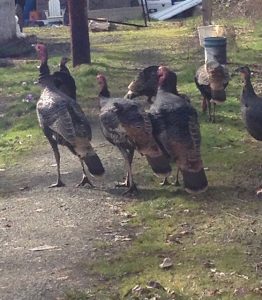
Turkeys roaming in Philomath (staff photo)

Let’s talk live turkeys first….

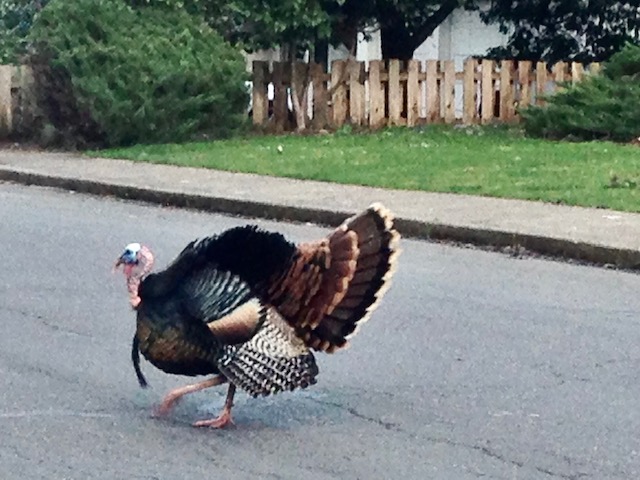
Wandering wild turkeys are not an uncommon sight in urban areas of Oregon, including certain neighborhoods of Corvallis and Philomath. Both comical and majestic, these birds are generally tolerated by their fellow urban dwellers. But the state Department of Fish and Wildlife stresses: Don’t feed the turkeys!  If your neighborhood flock (and their you-know-what) becomes too big of a nuisance, you might want to apply for an ODFW “turkey hazing” permit. (No hassling the turkeys without one!)

TALKING TURKEY: Planning and Shopping Your Meal
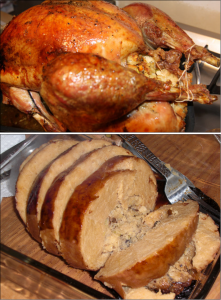
A meatless “Tofurky” roast (WikiMedia Commons)

So let’s “talk turkey” about Turkey Day logistics. That includes vegans and vegetarians who don’t eat actual turkeys!

  1. Whether you’re planning for a large-ish or more intimate gathering at your Thanksgiving table this year, you’re going to need the Guestimator to help you plan and shop for just the right quantities (with an option for leftovers, of course!); SO
  2. Your holiday Meal Plan and Shopping List are key tools. Hey! There’s an app for that! COINCIDENTALLY,
  3. Your holiday meal planning and shopping STARTS in your own pantry and freezer (after consulting your handy Freezer Inventory).

With our Kitchen Confessions blog, we hope to familiarize you with a variety of tools and Smart Strategies (such those highlighted above) to help you in these tasks. In addition to those at our own website, we love turning folks onto resources like these for Thanksgiving (and year-round) meal strategizing:

  • Make your own turkey bone broth and/or stock: Don’t let these nourishing and valuable parts of the turkey go to waste!
  • StillTasty.com, “Your Ultimate Shelf Life Guide,” for getting clear before Thanksgiving about how to handle those leftover cooked turkey pieces, that leftover gravy and those cooked giblets your kid doesn’t like;
  • First Alternative Natural Foods Co-op’s “Budget Bites” – budget-minded meal plans for a week’s worth of meals for two adults;
  • BigOven.com, also has meal planning and shopping lists (and tons of recipes). Upload your own recipes! (They could use a lot more vegan/vegetarian ones!)

TALKING TURKEY:  Caring and Sharing

Sharing food with others is an important holiday tradition, and it also happens to be the second-best prevention strategy on the EPA’s Wasted Food Scale. Turkey donations, in particular, are sought this year by the South Corvallis Food Bank, one of 68 local organizations in an amazing food rescue and redistribution hub managed by Linn Benton Food Share. (Scroll down for the complete list.) Food Share coordinates with non profit agencies, emergency food box pantries, gleaning groups, OSU dining facilities, public meal sites, AND legions of volunteers to gather and distribute over 4.6 million pounds of food annually. And every dollar donated to Food Share generates five meals for people in need!

In our next edition of Kitchen Confessions: Honoring this land and its Native peoples this Thanksgiving; Getting ready for loving those Thanksgiving leftovers!



Category: Kitchen ConfessionsTag: Benton County Community Holiday Food Drive, Budget Bites, CDC, COVID-19, First Alternative Co-op, Food Action Team, Linn Benton Food Share, Oregon Health Authority, StillTasty.com, Thanksgiving, Thanksgiving Food Drive, turkey, vegan, vegetarian

Photo credit: OSU Extension

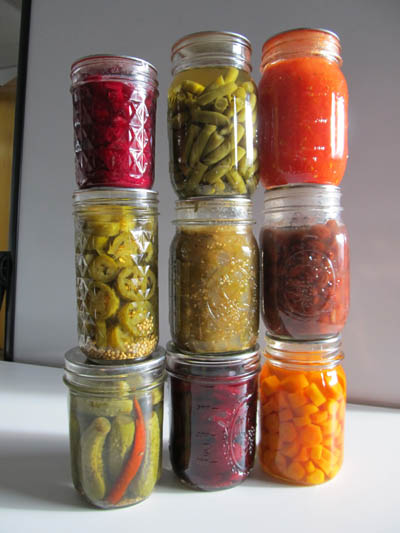
Zukes & cukes & squash, oh my! It’s Preservation Time.

October 2, 2020 //  by K'Rene (Karen) Kos

Photo credit: OSU ExtensionGreetings, Conscientious Food Consumers!
With the colors of fall brightening our dwindling hours of daylight, the harvest scramble is underway, along with a new season of eating.

Colorful outdoor displays of pumpkins, varieties of apples, corn and squashes of every shape announce the season at the grocery stores and the farmers’ markets. Neighbors are sharing/offloading zucchini and other overflow garden items.

Following the autumnal equinox, the race is on to get it all prepped and into our fall menus, our freezers, fridges and pantries. Speaking of menus — check out our “Budget Bites” page featuring delicious ideas for meal planning on a budget from NFLB/Sustainability Coalition partner, First Alternative Co-op. We love the Co-op’s recipe blog! Even more inspiration for eating seasonally is available with recipes from the Food Action Team of the Sustainability Coalition.

This year, along with COVID-19, interest is surging in old-fashioned food preservation practices like pickling, freezing, dehydrating and canning. If you’ve shopped at Bi-Mart lately, you may have noticed posters in the aisles with food preservation safety tips for everything from making jelly to jerky, courtesy of OSU Extension Service’s Home Food Safety and Preservation Program.

In the following sections, we will also make use of that expertise to help you make the most of your autumn abundance. You can also get your questions answered by a Master Food Preserver volunteer by calling the toll-free hotline at 800-354-7319 from 9 am to 4 pm, Monday-Friday, through October 9th.

DRY OR DEHYDRATE IT
Skip the snack aisle at the grocery store and bake your own crispy, healthy chips from apples, beets, kale, sweet potatoes and even sliced zukes! It’s not hard to find recipes online, but “Downshiftology” has a million fans (literally) for good reason.

For longer-term preservation of a variety of fruits and veggies using your oven or a food dehydrator, check out this how-to booklet.\

TIP: Use extra caution regarding food safety by following the pre-treatment instructions for destroying bacteria on food items prior to drying.

Beyond trail mix — how to use and enjoy fruits and veggies after drying.

FREEZE IT
– First prep, blanch, and package your future winter meal ingredients, just as for summer fruits and veggies (see our “summertime chillin'” blog).

– Use our Smart Strategies: Storage guide for Freezing Fruits and Vegetables for specific treatments.

– Download the FoodKeeper Food Safety app from the link on our website. It’s a mini-reference guide from the USDA on safe food storage and freshness guidelines for hundreds of food items.

– Don’t forget to make notes on your Freezer Inventory List!

PICKLE IT
For no ‘cukes left behind — nor mushrooms, peppers, corn onions, beans, beets, cabbage, zucchini or what have you! (Can you recite that old tongue-twister about Peter Piper and the pickled peppers?)

Pickling — using vinegar or fermentation — is one of the oldest methods of food preservation. The process has been improved through research and the evolution of food science during the last century, and now there are also resources for those with low-salt or other special dietary requirements. For the safest results, the experts at OSU Extension Service recommend using “up to date recipes from reliable sources.”

No offense to your great-aunt and her recipe!

CAN IT
Whether you’re experienced or a novice, OSU Extension Service has the detailed information you need for successful pressure cooking and/or canning, including checklists for steam- versus pressure-canning methods. It also lists publications on how to care for your home canning equipment.

Veteran canners will also appreciate the new Canning Timer and Checklist App!

In this week’s Kitchen Confessions:

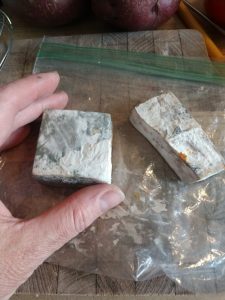
Jeanette Confesses:
These two remnants of artisan cheese were bagged and buried in the meat/cheese drawer of our fridge. By the time we discovered them, they were definitely over-aged!

$$ WASTED:  $3-4

LESSON LEARNED:  Place on “Eat First” shelf next time.

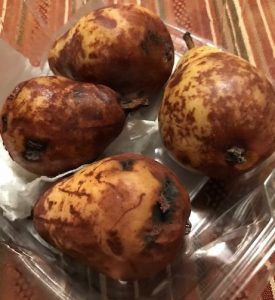
Karen Confesses:

These pears from a neighbor’s no-spray tree were almost ripe when they were given to me, so they wouldn’t end up rotting on the ground! I put them in a clear plastic clamshell in the upper area of my refrigerator compartment, since my “Eat First” area was already crowded. They degenerated into this state while I was temporarily absent from home during the worst of the wildfire smoke.

$$ WASTED:  None (gift); Cost: guilty conscience

LESSON LEARNED: Prepare and eat them right away! Make note of/rotate items in my “Eat First” area.

Wildfires Update: A month ahead of Thanksgiving, we are immensely grateful for the return of breathable air and for the heroic efforts of those working to contain the massive wildfires here in Oregon.

Category: Kitchen ConfessionsTag: BiMart, Budget Bites, Canning, cucumbers, dehydrating, Fall harvest, Fall season, First Alternative Coop, Food Action Team, Food Keeper app, Food preservation, Freezer Storage Guide, Master Food Preservers, OSU Extension Service Home Food Safety and Preservation program, seasonal eating, simply seasonal recipes, zucchini

Footer

© 2026 No Food Left Behind – Corvallis
  • Facebook
  • Instagram