
• Menu
  • Skip to right header navigation
  • Skip to main content
  • Skip to footer

No Food Left Behind – Corvallis

Prevent Wasted Food

  • About Us
  • Kitchen Confessions
  • Why It Matters
    • Facts and Impacts
    • What Is Wasted
    • What About Composting?
    • DEQ Food Fact Sheets
    • Videos: Why It Matters
  • What To Do
    • Recipes for Leftovers
    • Smart Strategies
    • Estrategias Sagaces
    • Apps
    • Budget-Minded Meal Plans
    • Challenge to Waste Less Food
    • DEQ Grant Final Reports
  • Videos
  • Contact
  • Español
  • About Us
  • Kitchen Confessions
  • Why It Matters
    • Facts and Impacts
    • What Is Wasted
    • What About Composting?
    • DEQ Food Fact Sheets
    • Videos: Why It Matters
  • What To Do
    • Recipes for Leftovers
    • Smart Strategies
    • Estrategias Sagaces
    • Apps
    • Budget-Minded Meal Plans
    • Challenge to Waste Less Food
    • DEQ Grant Final Reports
  • Videos
  • Contact
  • Español

COVID-19

Talking Turkey and wasting less

November 12, 2020 //  by K'Rene (Karen) Kos

(updated Nov. 2025)

Greetings, Conscientious Food Consumers!

It’s time to “talk turkey” (even for vegans and vegetarians) about less wasted food.

Imagine sitting at bountiful Thanksgiving dinner table. You’ve just filled your plate with an appetizing assortment of your favorite dishes. Suddenly, someone comes over and scoops up a quarter of what’s on your plate, takes it over to the compost bin and dumps it.

Shocking, right? But it’s a good metaphor for how the average American family wastes 25-30 percent of its food purchases every year, at a cost of $2,900! What’s also wasted are the Earth’s precious resources — water, energy and soil — as well as the human labor that went into that food.

When this was first written, in November 2020, everyone was preparing for their first pandemic Thanksgiving. Years later, those cautious and budget-conserving adaptations remain entirely relevant today. Read on, Conscientious Food Consumers!
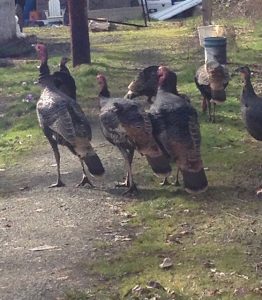
Turkeys roaming in Philomath (staff photo)

Let’s talk live turkeys first….

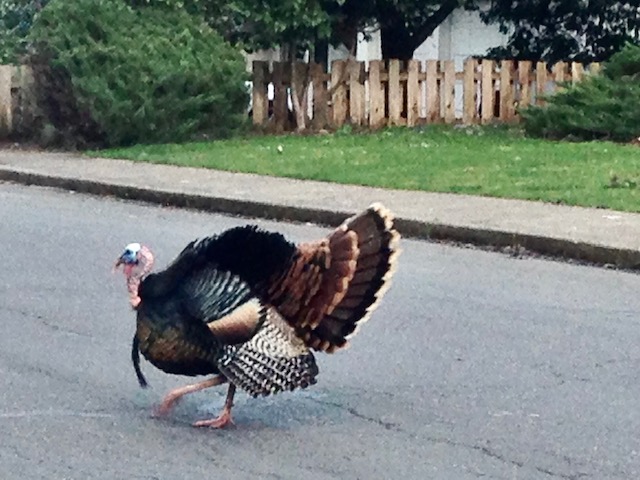
Wandering wild turkeys are not an uncommon sight in urban areas of Oregon, including certain neighborhoods of Corvallis and Philomath. Both comical and majestic, these birds are generally tolerated by their fellow urban dwellers. But the state Department of Fish and Wildlife stresses: Don’t feed the turkeys!  If your neighborhood flock (and their you-know-what) becomes too big of a nuisance, you might want to apply for an ODFW “turkey hazing” permit. (No hassling the turkeys without one!)

TALKING TURKEY: Planning and Shopping Your Meal
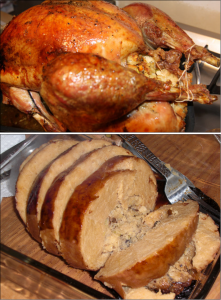
A meatless “Tofurky” roast (WikiMedia Commons)

So let’s “talk turkey” about Turkey Day logistics. That includes vegans and vegetarians who don’t eat actual turkeys!

  1. Whether you’re planning for a large-ish or more intimate gathering at your Thanksgiving table this year, you’re going to need the Guestimator to help you plan and shop for just the right quantities (with an option for leftovers, of course!); SO
  2. Your holiday Meal Plan and Shopping List are key tools. Hey! There’s an app for that! COINCIDENTALLY,
  3. Your holiday meal planning and shopping STARTS in your own pantry and freezer (after consulting your handy Freezer Inventory).

With our Kitchen Confessions blog, we hope to familiarize you with a variety of tools and Smart Strategies (such those highlighted above) to help you in these tasks. In addition to those at our own website, we love turning folks onto resources like these for Thanksgiving (and year-round) meal strategizing:

  • Make your own turkey bone broth and/or stock: Don’t let these nourishing and valuable parts of the turkey go to waste!
  • StillTasty.com, “Your Ultimate Shelf Life Guide,” for getting clear before Thanksgiving about how to handle those leftover cooked turkey pieces, that leftover gravy and those cooked giblets your kid doesn’t like;
  • First Alternative Natural Foods Co-op’s “Budget Bites” – budget-minded meal plans for a week’s worth of meals for two adults;
  • BigOven.com, also has meal planning and shopping lists (and tons of recipes). Upload your own recipes! (They could use a lot more vegan/vegetarian ones!)

TALKING TURKEY:  Caring and Sharing

Sharing food with others is an important holiday tradition, and it also happens to be the second-best prevention strategy on the EPA’s Wasted Food Scale. Turkey donations, in particular, are sought this year by the South Corvallis Food Bank, one of 68 local organizations in an amazing food rescue and redistribution hub managed by Linn Benton Food Share. (Scroll down for the complete list.) Food Share coordinates with non profit agencies, emergency food box pantries, gleaning groups, OSU dining facilities, public meal sites, AND legions of volunteers to gather and distribute over 4.6 million pounds of food annually. And every dollar donated to Food Share generates five meals for people in need!

In our next edition of Kitchen Confessions: Honoring this land and its Native peoples this Thanksgiving; Getting ready for loving those Thanksgiving leftovers!



Category: Kitchen ConfessionsTag: Benton County Community Holiday Food Drive, Budget Bites, CDC, COVID-19, First Alternative Co-op, Food Action Team, Linn Benton Food Share, Oregon Health Authority, StillTasty.com, Thanksgiving, Thanksgiving Food Drive, turkey, vegan, vegetarian

No strawberries left behind… And hooray for the harvesters!

June 16, 2020 //  by K'Rene (Karen) Kos

Greetings, Conscientious Food Consumers!

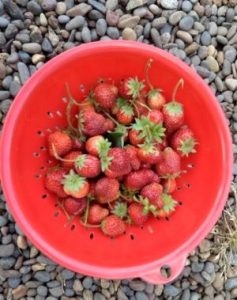
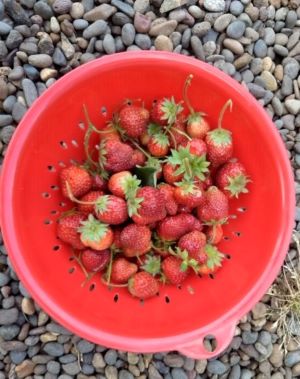
We Willamette Valley dwellers are so blessed to be living in one of the largest berry-producing regions in the country. Strawberry season is here! Luscious, juicy and vibrantly red — like these, picked fresh from a Corvallis backyard garden — the local bounty of strawberries is just now waiting to delight our taste buds.

Normally in early June, we would also be anticipating a taste of the World’s Largest Strawberry Shortcake at the annual Strawberry Festival in Lebanon — but predictably, this year’s festival (the 111th) became a casualty of the coronavirus.

Here in Linn and Benton Counties, we have the luxury of enjoying locally-produced strawberries, as well as blueberries, marion and blackberries, raspberries and so many other varieties. Let’s not forget how most of those delicious fruits get to our markets and our tables — via Oregon’s agricultural workers. Hooray for the harvesters!

These incredibly hard-working people have kept the berries (and everything else) coming, despite the deadly risk of COVID-19. In late May, the Oregon Department of Agriculture, with help from OSU’s Extension Services and the Oregon National Guard, began distributing free PPE and field sanitation supplies throughout the state. Another state initiative announced June 10, the Food Security & Farmworker Safety Program, provides $30 million to help local producers with the increased costs of keeping our state’s essential agricultural workforce housed, transported, trained and safe in the pandemic conditions.

Given this monumental effort to secure our local food chain, it’s up to us, Conscientious Food Consumers, to do our part: No Strawberries Left Behind!

Step 1 (fresh): Eat A.S.A.P.! Store berries in an unsealed container on your fridge shelf away from other produce like apples and avocados, which emit traces of ethylene gas that will cause the berries to over-ripen. Don’t wash them until just before preparing or consuming, preferably within 3-7 days of purchase.

Step 2 (fresh – large batches): To prep and freeze large batches (like flats) of berries, check out these step-by-step instructions from our local experts at the OSU and Pacific NW Extension Services. (Note details regarding sugar/no sugar prep for maintaining quality of frozen fruit.) Make sure your hands and all kitchen utensils and surfaces are clean before getting started!

Tip: Avoid frozen “berry bricks” by spreading out prepped berries across waxed paper on a cookie sheet and freezing them loosely at first. Transfer portions of the pre-frozen berries into airtight containers and return to the freezer. Or stick ’em with a skewer for strawberry popsicles!

Step 3 (fresh and previously-frozen): Note the date for your berries-in-waiting on your handy-dandy Freezer Inventory List, kept on or near your fridge. Make sure to eat ’em up within 10-12 months!

Alternate Step 1 (preserving through dehydration): If you’re into making your own dried fruit/fruit leathers using the oven or an electric dehydrator, OSU’s Extension Service has the definitive how-to guide.

This week’s Kitchen Confession: A Berry Sad Story

Karen Confesses:

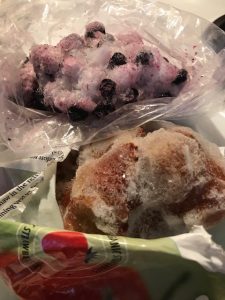
A friend cleaning out her freezer  when moving gave me a half-bag of frozen strawberries. I planned on using ’em right away in a smoothie, along with a small portion of blueberries I already had on hand. Carelessly, I left the berry bags in the freezer door for easy access, and didn’t take a moment to write it on my Freezer Inventory! Some weeks later… berry sad! A lack of air-tight seal on the bags ensured the spoilage.

Lesson Learned: Tightly seal berries in container, zip lock freezer bag or double-bag. Make sure berries are located where the freezer temperature is consistent. Use Freezer Inventory (take my own advice)!

$ Wasted: Around $4

Enjoy this berry beautiful season… there’s lots more on the way! Be well.

Category: Kitchen ConfessionsTag: COVID-19, farmworkers, Lebanon Strawberry Festival, Oregon Department of Agriculture, OSU Extension Service, Strawberries

Footer

© 2025 No Food Left Behind – Corvallis
  • Facebook
  • Instagram